
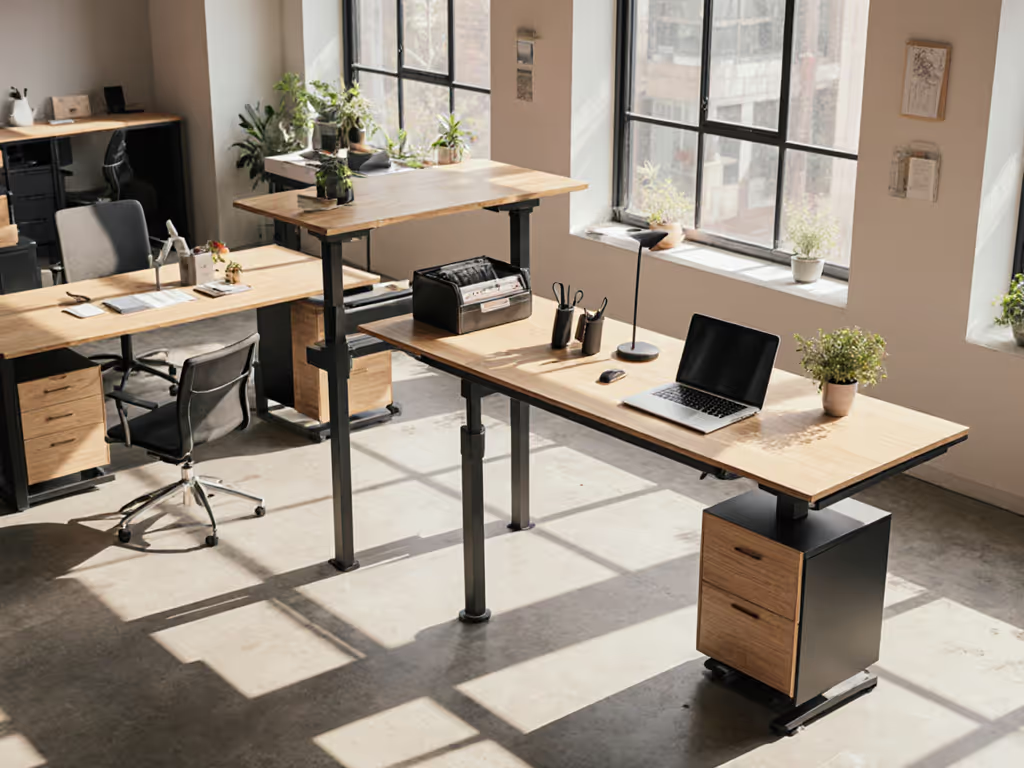
Standing Desk Financing: Business Lease Options Explained
By Sofía Alvarez • 12th Nov

When outfitting teams with standing desk tables, precise anthropometric fit isn't just comfort, it is productivity infrastructure. For businesses navigating ergonomic office financing, leasing presents strategic advantages beyond upfront cost savings. As teams grow more diverse in height (spanning 5th-95th percentile users), flexible acquisition models ensure every employee achieves neutral posture without straining budgets. This guide cuts through leasing complexities with measurement-led clarity for facilities managers and business owners.
Neutral first, comfortable always - this principle anchors every equipment decision when investing in long-term workforce well-being.
What Business Standing Desk Financing Options Exist?
Business standing desk financing typically falls into three categories:
-
Operating Leases: Short-term rentals (3–24 months) where you return equipment after the term. Ideal for pilot programs. Example: iMovR's treadmill desk program requires 3+ month commitments at $99/month, applying 80% of payments toward purchase if converted.
-
Capital Leases: Longer agreements (24–60 months) functioning as installment purchases. You assume ownership risks/benefits immediately, including tax advantages under Section 179.
-
Lease-to-Own: Hybrid models where a portion of payments (e.g., 10% of value) secures ownership at term end. Critical for desks needing height customization beyond standard ranges.
Unlike consumer credit, business leasing separates expenditure from capital investment, preserving cash flow while accommodating teams from 152cm (5'0") to 190cm (6'3"). For rollout strategies, training, and ROI tracking, see our corporate standing desk implementation guide. A recent industry report confirms 32% of enterprise equipment acquisitions now use leasing, driven by budget flexibility.
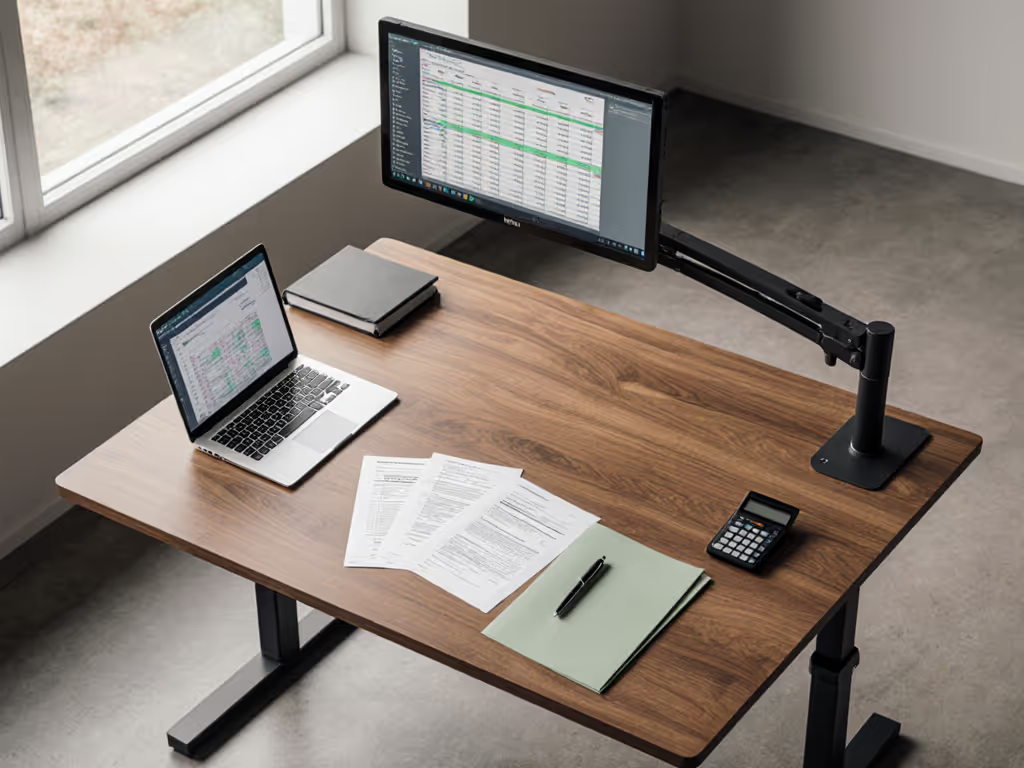
Short-Term vs. Long-Term Leasing: Which Fits Your Workflow?
Short-term leases (under 12 months) suit:
- Wellness program pilots
- Temporary project teams
- Offices testing desk compatibility across diverse body types
Critical consideration: Verify if payments apply toward purchase (e.g., iMovR applies 80%). Without this, long-term costs exceed buying. For example, 12 months at $99/month totals $1,188 versus $850 for a mid-range standing desk table, making short-term purely experimental.
Long-term leases (24+ months) benefit:
- Permanent ergo-upgrades
- Teams with non-average height distributions
- Organizations prioritizing predictable budgeting
Lease structures here often include maintenance coverage, vital for addressing motor drift or controller errors that disrupt work. If you manage desks in-house, bookmark our standing desk maintenance and troubleshooting guide. Given that 68% of facilities managers cite repair delays as a top pain point (per 2024 Workplace Ergonomics Survey), this reduces operational risk.
How Does Leasing Address Ergonomic Fit Challenges?
Standard desks fail 30% of employees due to limited height ranges. A 152cm (5'0") user often needs 58-71cm desk height for neutral elbow position, while 190cm (6'3") users require 76-89cm. Most stock desks max out at 76cm, excluding taller staff. For requirements above 6'5", review our guide for very tall users.
Leasing solves this through:
- Configurable height extensions: Adding 15cm legs accommodates 95th percentile males
- Precision increments: 0.5cm step size ensures exact height dialing
- Crossbar-free bases: Critical for knee clearance at seated positions
During a recent rollout, standard desks missed both 5th and 95th percentile users in one team. Leasing allowed swapping to frames with 50-125cm ranges, proving fit beats features when your wrists and neck thank you. Without flexible financing, such adjustments strain capital budgets.
What Tax Implications Should You Consider?
Business standing desk financing interacts with tax strategy in two key ways:
-
Deductible Expenses: Lease payments are 100% deductible as operational costs (vs. depreciation for purchases). Best for businesses with low taxable income.
-
Section 179 Benefits: Capital leases may qualify for immediate expense write-offs up to $1.16M (2025). Optimal if buying outright would exceed this threshold.
Consult your CPA, but data shows leasing reduces net equipment costs by 18-22% for S-corporations with marginal tax rates above 25%. Never sacrifice ergonomic specifications for tax perks, improperly fitted desks increase absenteeism by 14% (Gallup Workplace Study, 2024). To set correct monitor and keyboard heights, follow our standing desk ergonomics guide.
What Lease Agreement Red Flags Should You Spot?
Avoid these pitfalls in office equipment leasing contracts:
- "Fair Market Value" purchase options: Lessors often inflate end-term prices. Demand fixed residual values (e.g., 10% of MSRP).
- Hidden maintenance costs: Clarify if motor replacements or controller recalibration are covered.
- Restrictive height customization: Some leases void warranties if legs are extended beyond stock range.
- Inflexible return terms: Require 30-day termination clauses for ill-fitting equipment.
Always measure: Confirm the minimum seated height (≤60cm for petite users) and maximum standing height (≥89cm for tall users) align with your team’s anthropometrics before signing. A 2023 IBISWorld audit found 41% of leased desks required height modifications post-deployment.
When Should You Lease vs. Buy Standing Desks?
| Scenario | Lease | Buy |
|---|---|---|
| <10 employees | ❌ Avoid (high per-unit cost) | ✅ |
| Piloting ergo-upgrades | ✅ Ideal (3–6 mo trials) | ❌ |
| Teams with >15% non-average height | ✅ Essential for customization | ⚠️ Only if specs match |
| Stable team size >50 | ⚠️ Compare TCO | ✅ Lower 5-yr cost |
Leasing shines for flexible ergonomic solutions in dynamic workplaces. If you decide to purchase, prioritize models with a long-term warranty and proven service to protect your TCO. If your staff turnover exceeds 20% annually or you lack warehouse space for unused units, leasing avoids obsolescence risk. For stable teams, buying with bulk discounts often wins long-term, but only when desks precisely match your anthropometric spread.
Actionable Next Steps for Your Business
- Audit your team’s height distribution: Measure 10 random employees. If anyone falls below 157cm or above 183cm, demand desk ranges covering 55-85cm.
- Request spec sheets with minimum seated height: Many brands hide this metric. Reject any solution with a seated minimum above 60cm.
- Negotiate lease addendums: Require height extension compatibility and 0.5cm adjustment increments.
- Calculate true TCO: Factor in maintenance, productivity loss from poor fit, and tax implications, not just monthly payments.
Precision fit isn't a luxury; it's infrastructure. By leveraging business standing desk financing strategically, you turn ergonomic accommodations from a cost center into a productivity catalyst. Start with your people's measurements, not marketing claims, and ensure every lease clause serves their neutral posture. As teams evolve, your furniture strategy must too: flexible ergonomic solutions keep pace with human diversity, not the other way around.
Related Articles

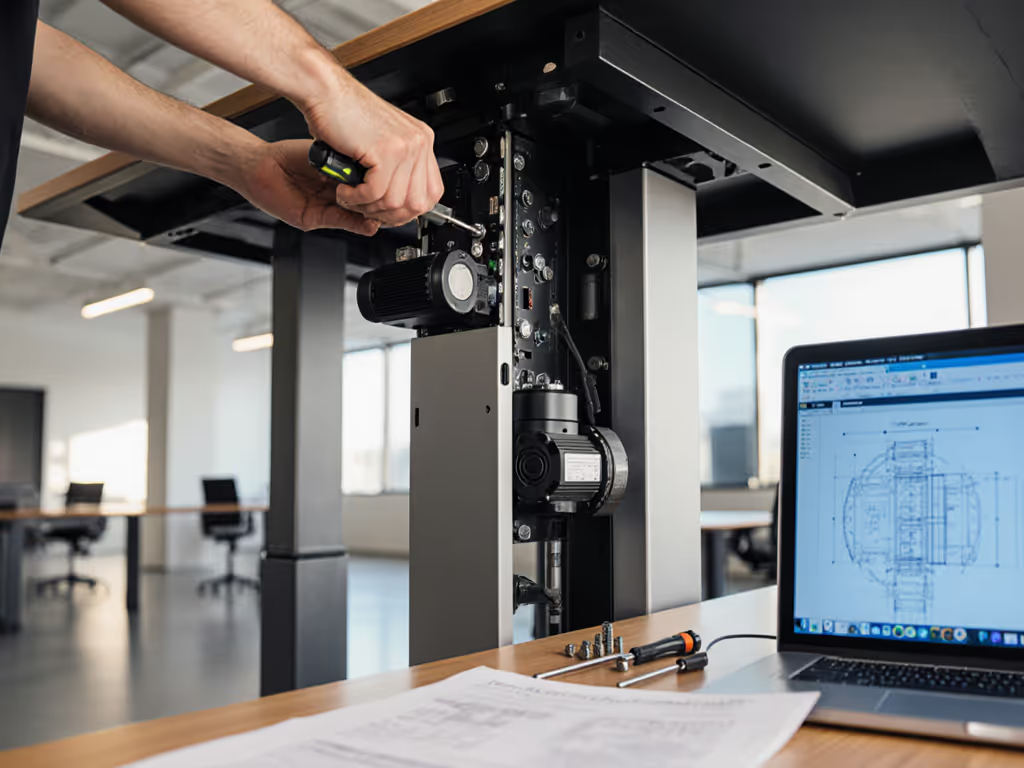
Standing Desk Repairability: Why Corporate Buyers Demand It
Prioritize repairability to cut seven-year TCO by about 37%, reduce downtime from 11.2 to 1.8 days, and curb e-waste in enterprise desk fleets. Use the procurement checklist to vet warranties and vendors - demand published parts catalogs, standard fasteners, and written spare-parts commitments.
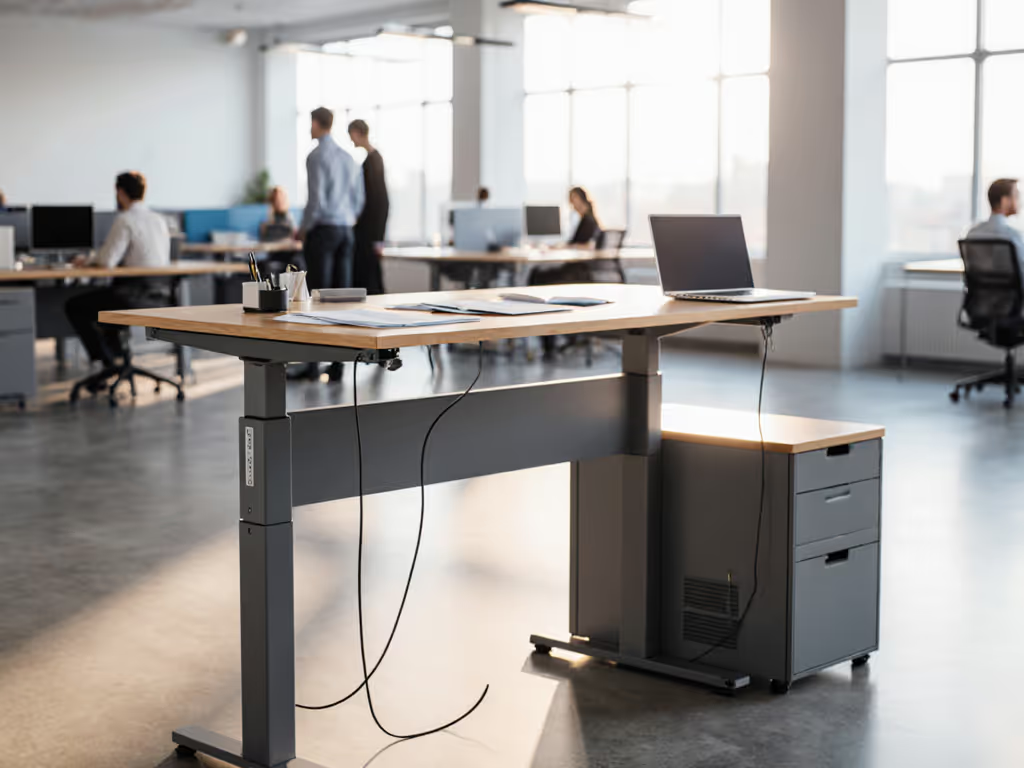
Reliable Corporate Standing Desks: ROI Implementation Guide
Treat standing desks as critical equipment: run rigorous pilots with pass/fail thresholds, validate anthropometric fit, enforce certified cable management, and lock in SLAs with local spares to prevent downtime. Track desk downtime, incident rates, and service response to prove ROI and reduce support costs.