Circadian Light Standing Desk: Reduce Eye Strain, Sleep Better
By Sofía Alvarez • 20th Nov
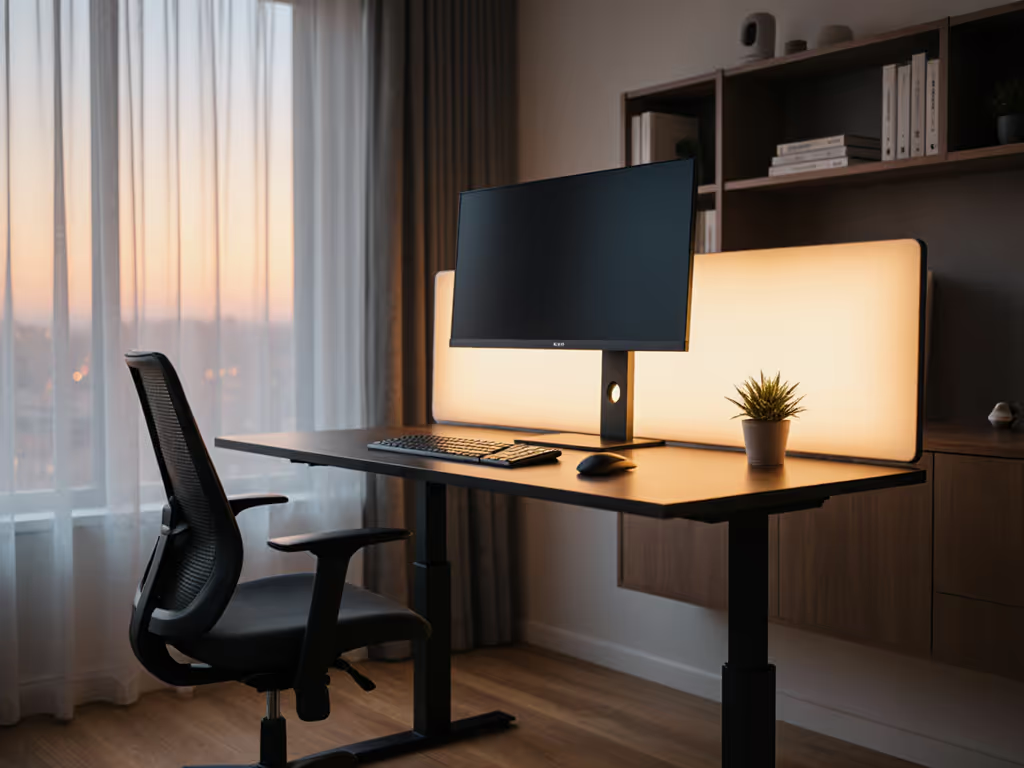
Most professionals seeking the perfect chair standing desk aren't considering how their workspace lighting affects their circadian rhythm. And when you're evaluating a blue light standing desk setup, you're missing half the equation if you're not addressing how natural light patterns interact with your posture transitions. True workplace wellness comes from understanding both your physical dimensions and your light environment, creating a circadian rhythm workstation that supports your entire biology through the workday. If you're exploring integrated illumination options, see our standing desks with built-in lighting comparison to reduce eye strain while supporting circadian cues.
FAQ Deep Dive: Your Circadian Standing Desk Questions Answered
As someone who's measured hundreds of workstations across diverse body types, I've seen how improper desk height combined with poor lighting creates compound strain. Let me address your most pressing questions with measurement-led guidance that translates percentiles into dialed-in heights.
How does standing work impact circadian rhythms?
When you alternate between sitting and standing positions, you're not just changing posture, you're potentially altering your light exposure geometry. At standing height (typically 38-44 inches for most adults), your eyes sit 6-10 inches higher than seated, placing them closer to window lines and overhead lighting.
This height difference matters significantly for your circadian regulation. The 5th percentile female (approximately 152cm/5'0") standing at her neutral elbow height will have eyes positioned differently than the 95th percentile male (187cm/6'2") at his standing position. These variations affect how much circadian-effective light reaches the retina throughout the day. For the research behind these effects, review our scientific standing desk findings with citations on light exposure and productivity.
Measure your body, not just your space. This small adjustment can make the difference between lighting that supports your rhythm versus lighting that disrupts it.
What's the ideal positioning for a natural light desk?
The optimal placement follows three key measurements:
- Position your desk perpendicular to windows (not directly facing them)
- Maintain 50-70cm clearance between your monitor and window for glare control
- Ensure your eye level sits 10-15cm below the top of the window frame at standing height
This configuration leverages natural light without creating screen glare. For north-facing windows (consistent but cooler light), you'll want larger surface areas; south-facing (brighter, warmer light) requires more careful shading management.
I recently measured a workspace where the 168cm designer was struggling with afternoon glare. Simply rotating her ergonomic standing desk 15 degrees created the perfect light diffusion while maintaining a standing height that kept her neutral wrist position.
How do I size an ergonomic standing desk for my body?
Most desk height recommendations are tragically generic. True ergonomic fit requires three measurements:
- Standing elbow height (with shoulders relaxed)
- Seated elbow height (90-degree bend)
- Eye-to-monitor distance
For proper standing height:
- Your elbows should rest at 90-105 degrees with keyboard/mouse
- Forearms should be parallel to the floor
- Monitor top should align with eyebrow level
For the 5th-95th percentile working population (152-187cm), the ideal standing desk range spans 62-125cm. Anything less excludes significant portions of the workforce. This is why I always recommend measuring your specific neutral posture before purchasing.
Fit beats features when your wrists and neck thank you.
What are the critical stability features for a chair standing desk?
Wobble at standing height causes two major issues: typing errors and circadian disruption. When your screen vibrates, your pupils constantly adjust focus, fatiguing the muscles that regulate light exposure. The stability requirements for standing differ significantly from seated positions:
- Base width: Minimum 60cm front to back for standing stability
- Leg thickness: At least 2.5 mm steel at standing height
- Crossbar placement: Must sit ≥20cm above floor to avoid knee interference
- Weight capacity: Account for 20 to 30% more than your equipment weight
During a team rollout, I measured a 5'1" designer and a 6'3" developer at the same desk. The stock range missed both neutral elbow heights. Swapping to longer legs and a thinner top fixed it. Watching them work comfortably all week cemented my belief: fit is the first specification.
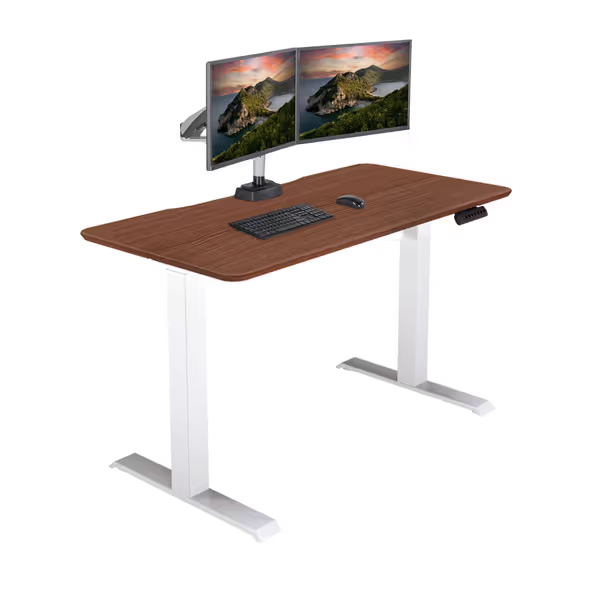
Vari Essential Electric Standing Desk
Smooth, silent height adjustments for improved posture and focus.
$250.59
Height Adjustment Range27.5" - 47.2"
Height Adjustment Range27.5" - 47.2"
Pros
Stable at standing height, no creaking.
Easy assembly with clear instructions.
Cons
Mixed reviews on motor longevity; some report early failure.
Desk stops moving for 10+ seconds sometimes.
Customers find the standing desk to be of high quality, easy to assemble with clear instructions, and appreciate its sturdiness, with one noting no creaking or indications of stress. They consider it good value for money and like its variable height adjustment feature. However, the functionality receives mixed reviews, with some reporting the motor failing after three months of use. Moreover, durability is also mixed, with some saying it holds up well while others report it breaking within four months. Additionally, customers report issues with movement, noting the desk stops moving for more than 10 seconds.
Customers find the standing desk to be of high quality, easy to assemble with clear instructions, and appreciate its sturdiness, with one noting no creaking or indications of stress. They consider it good value for money and like its variable height adjustment feature. However, the functionality receives mixed reviews, with some reporting the motor failing after three months of use. Moreover, durability is also mixed, with some saying it holds up well while others report it breaking within four months. Additionally, customers report issues with movement, noting the desk stops moving for more than 10 seconds.
How does a blue light standing desk setup reduce eye strain?
"Blue light" has become marketing hyperbole, but the physics behind light wavelength effects on circadian regulation remains valid. The critical factor isn't eliminating blue light, it's timing your exposure.
Morning (6-10am): 5000-6500K lighting at ≥500 lux to stimulate alertness. Afternoon (2-5pm): 4000-5000K at 300-400 lux to maintain focus. Evening transition (4-6pm): 3000-4000K at <300 lux to prepare for rest.
Your standing desk transitions should align with these light shifts. When you stand in the morning, position yourself to capture natural blue-enriched light. When standing in late afternoon, angle away from direct sunlight.
For workstation lighting specifically:
- Position task lights below monitor height to avoid retinal glare
- Use 2700-3000K bulbs for ambient lighting in evening hours
- Maintain 3:1 contrast ratio between screen and surroundings
What should I look for in a circadian rhythm workstation?
When evaluating a complete workstation system, focus on these often-overlooked features:
- Height range: Minimum 62-125cm (24-49 inches) for true 5th-95th percentile coverage
- Step increments: ≤0.5cm adjustments for precise neutral posture tuning
- Controller fidelity: Memory presets that maintain exact height (no drift)
- Crossbar clearance: ≥22cm from floor for comfortable standing posture
- Surface thickness: ≤2.5cm to maximize effective height range
Many desks claim "ergonomic" design while offering only 5-7cm between height settings. That is too coarse for meaningful posture adjustments. The best ergonomic standing desk models provide 0.5cm increments through their full range.
How do I measure for proper fit at my standing desk?
Follow this three-step measurement protocol (takes 2 minutes):
- Neutral standing posture test:
- Stand naturally with arms relaxed at sides
- Bend elbows to 90 degrees as if typing
- Measure from floor to elbow crease (this is your standing work height)
- Monitor positioning check:
- At standing height, top of screen should align with eyebrows
- Distance from eyes to screen: 50-70cm (20-28 inches)
- Light exposure assessment:
- At standing height, verify you can see the sky (not just buildings) through the window
- Ensure no direct sunlight hits your screen between 10am-2pm
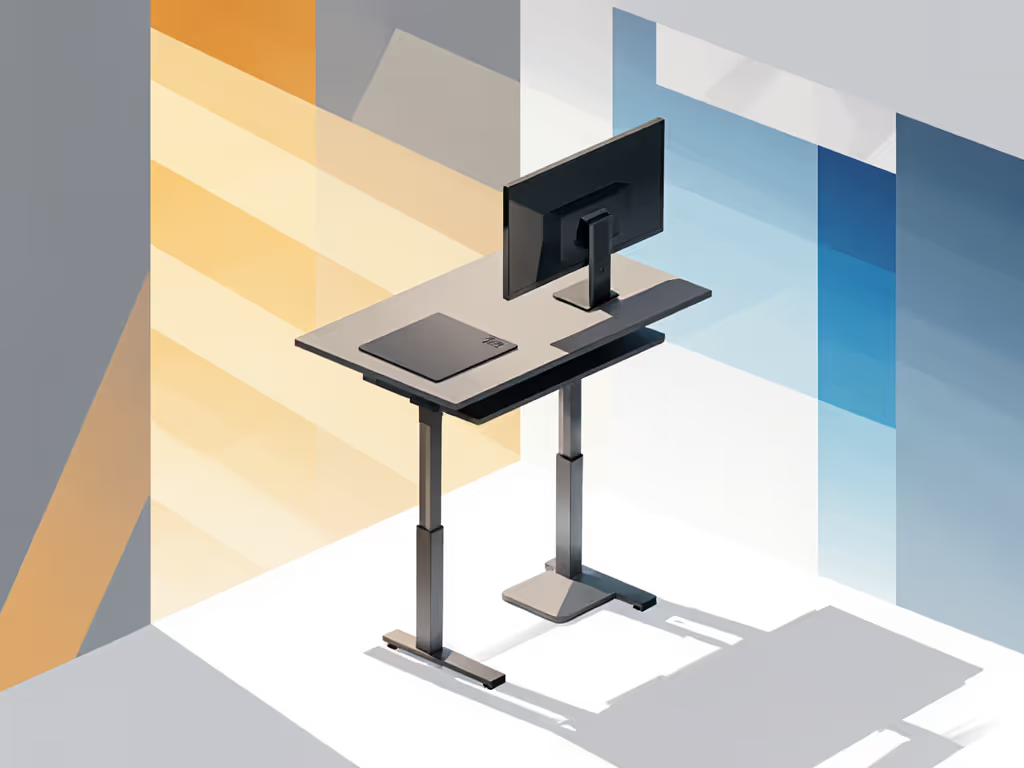
This simple routine prevents the most common setup errors that undermine both your posture and circadian health. If you're new to sit-stand work, follow our standing desk transition guide to build up standing time without discomfort. Remember that your ideal height differs between standing and sitting positions by 15-25cm for most adults.
Making Your Circadian Standing Desk Work For You
When I helped outfit a remote team recently, the biggest "aha" moment came when we combined proper desk heights with strategic lighting placement. The 157cm writer went from chronic afternoon headaches to vibrant focus simply by raising her chair standing desk to her true neutral height and repositioning her monitor away from direct window glare.
Your body doesn't lie. When your workspace aligns with both your anthropometry and your circadian biology, the improvements in focus, comfort, and sleep quality become unmistakable. The compound effect of proper fit and thoughtful lighting creates more than momentary comfort; it builds sustainable work patterns that support your long-term health.
Your Actionable Next Step
This week, measure your standing elbow height and compare it to your current desk's maximum height. If there's more than 5cm difference, you're fighting your physiology every time you stand. Photograph your workspace at standing height and check whether your eyes align with the top third of your window.
Measure your body, not just your space. Then adjust either your desk height or your lighting setup to create that critical alignment between your physical dimensions and your light environment. This small calibration yields outsized benefits for both your immediate comfort and your long-term circadian health.
Begin with these two adjustments today, and you'll notice reduced eye strain within 48 hours and improved sleep quality within two weeks. Your circadian rhythm workstation isn't about expensive gear, it's about precise accommodation to your unique biology.
Related Articles